
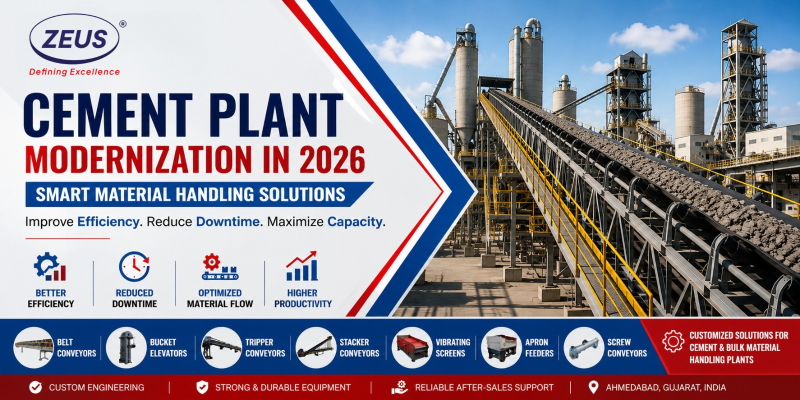
Cement plants are entering a new phase of modernization. Along with increasing production capacity, manufacturers are focusing on better material flow, automation, equipment reliability, maintenance, energy efficiency, and improved plant utilization.
For companies searching for Cement plant machinery manufacturers in Ahmedabad, modernization is not only about replacing old equipment. It is about selecting machinery and material handling systems that fit the plant’s capacity, layout, material characteristics, and future requirements.
From conveyors and bucket elevators to feeders, screens, stackers, and customized material handling systems, the right equipment can help cement plants improve operational efficiency and reduce unnecessary downtime.
Why Cement Plant Modernization Matters
Cement plants continuously handle large quantities of limestone, coal, clinker, cement, additives, and other bulk materials.
When material handling equipment becomes outdated or cannot match the required production capacity, several problems can occur:
- Material flow restrictions
- Conveyor downtime
- Excessive material spillage
- Higher maintenance requirements
- Equipment bottlenecks
- Inefficient plant layouts
- Increased operational costs
Modernizing critical equipment can help address these challenges while preparing the plant for future production requirements.
How Smart Material Handling Improves Cement Plants
Modern material handling is moving beyond basic transportation. Today’s systems can combine efficient mechanical design with better control, monitoring, automation, and application-specific engineering.
A well-designed system can help improve:
- Material flow
- Equipment availability
- Production efficiency
- Maintenance planning
- Plant safety
- Space utilization
- Long-term reliability
However, the right solution depends on the actual plant requirement.
Key Equipment Used in Cement Plant Modernization
Belt Conveyors: Belt conveyors provide continuous transportation of bulk materials across different sections of a cement plant.
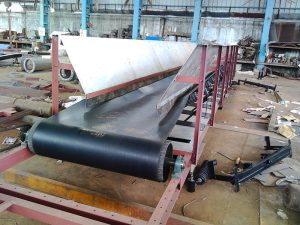
The conveyor design depends on capacity, belt width, material properties, conveying distance, elevation, and plant layout.
Zeus Engitech manufactures belt conveyors for cement and other bulk material handling applications, with published capacities up to 2000 TPH. The company states that its conveyors are designed according to site conditions and material properties.
Bucket Elevators: Bucket elevators provide vertical transportation of bulk materials between different elevations.
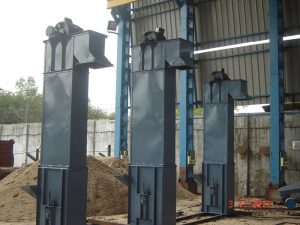
They are especially useful where a plant needs vertical material movement without using a long horizontal conveyor route.
Zeus Engitech manufactures belt-type and chain-type bucket elevators, with cement industries listed among their applications.
Tripper Conveyors: Tripper conveyors distribute bulk material to multiple discharge locations.
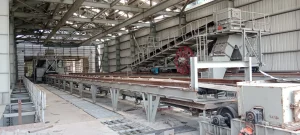
They can be useful for stockpiling and material distribution in cement plants.
Fixed and travelling configurations can be selected according to the plant layout and application requirements.
Stacker Conveyors: Stacker conveyors help distribute bulk material across storage areas.
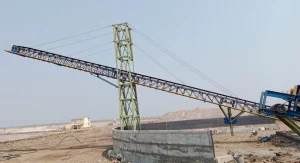
A properly designed stacker system can improve stockpile management and make better use of available storage space.
High Angle Cleated Belt Conveyors: When a cement plant has limited floor space, a high-angle conveying solution can help transport material at steep inclinations.
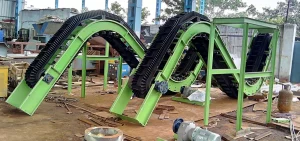
This can reduce the horizontal space required for certain conveying applications.
Screw Conveyors: Screw conveyors are suitable for controlled transportation of powdery and granular materials.
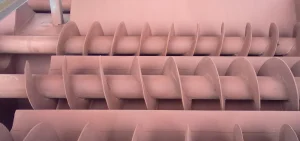
They can be used where enclosed conveying is preferred and can be configured according to material characteristics and capacity.
How Automation Can Improve Cement Plant Operations
Automation can play an important role in modern cement plants.
Depending on the equipment and existing control infrastructure, automation can support:
- Automated start and stop
- Equipment interlocking
- Position monitoring
- Conveyor status monitoring
- Safety controls
- Process coordination
- Operating alerts
The objective should not be to add technology simply for the sake of automation. Instead, automation should solve a specific operational challenge.
Predictive Maintenance for Cement Plant Equipment
Maintenance is another important part of modernization.
Traditional maintenance often relies on fixed schedules. However, equipment condition can vary depending on operating hours, material characteristics, load, environment, and component quality.
Monitoring operating conditions can help maintenance teams identify potential issues earlier.
For conveyor systems, areas that may require regular attention include:
- Belts
- Idlers
- Pulleys
- Bearings
- Motors
- Gearboxes
- Scrapers
- Chutes
- Structural components
Early identification of abnormal conditions can help teams plan maintenance before a minor issue becomes a major breakdown.
How to Choose the Right Machinery Manufacturer
When evaluating Cement plant machinery manufacturers in Ahmedabad, location should not be the only consideration.
Cement manufacturers should evaluate:
Engineering Capability
Can the manufacturer design equipment according to your material, capacity, and plant layout?
Manufacturing Quality
Does the manufacturer have the required manufacturing and fabrication capabilities?
Customization
Can the equipment be modified according to site-specific requirements?
Capacity
Can the machinery handle the required TPH while supporting future expansion?
Maintenance
Can critical components be easily inspected, maintained, and replaced?
Project Support
Does the manufacturer provide technical assistance during installation and commissioning?
After-Sales Support
Are spare parts and technical support available when required?
These factors can help cement manufacturers select equipment based on long-term value rather than only the initial purchase price.
Why Customized Material Handling Matters
No two cement plants have exactly the same requirements.
One facility may have long conveying distances, while another may have limited installation space. Similarly, material density, particle size, moisture, abrasiveness, and temperature can vary.
Customized equipment can therefore be designed according to:
- Required capacity
- Material properties
- Conveyor length
- Elevation
- Plant layout
- Available space
- Feeding arrangement
- Discharge points
- Operating conditions
This approach can improve equipment integration and help create a more efficient material handling system.
Why Choose Zeus Engitech?
Zeus Engitech is an Ahmedabad-based engineering company specializing in bulk material handling equipment and customized industrial solutions.
Its product portfolio includes:
- Belt Conveyors
- Metallic Belt Conveyors
- Telescopic Belt Conveyors
- Bucket Elevators
- Tripper Conveyors
- Screw Conveyors
- Drag Chain Conveyors
- High Angle Cleated Belt Conveyors
- Stacker Conveyors
- Vibrating Screens
- Apron Feeders
- Gates and Diverters
Several of these products are designed for cement industry applications.
The company focuses on developing equipment according to material characteristics, capacity, site conditions, and specific project requirements.
This makes an application-based approach especially useful for new cement plants, plant expansions, modernization projects, and replacement of existing material handling equipment.
Brownfield vs Greenfield Cement Plant Modernization
Greenfield Projects
A new plant provides greater flexibility during equipment selection and layout planning.
Engineers can design the complete material handling system around:
- Production capacity
- Future expansion
- Equipment integration
- Maintenance access
- Storage requirements
- Automation
Brownfield Projects
Existing plants require a different approach because new equipment must often integrate with existing:
- Conveyors
- Structures
- Transfer points
- Electrical systems
- Process equipment
- Plant layouts
Therefore, brownfield modernization requires careful site evaluation and customized engineering.
What Information Should You Share With a Machinery Manufacturer?
Before requesting a machinery solution, prepare:
- Material type
- Required capacity in TPH
- Bulk density
- Particle size
- Moisture
- Temperature
- Conveying distance
- Elevation
- Plant layout
- Feeding point
- Discharge point
- Available space
- Operating hours
Providing these details allows the engineering team to understand the application and recommend suitable equipment.
Benefits of Modern Material Handling Systems
A properly planned modernization project can help cement plants achieve:
Better Material Flow
Efficient equipment can reduce bottlenecks between different plant sections.
Lower Downtime
Reliable machinery and planned maintenance can reduce unexpected interruptions.
Improved Capacity Utilization
Properly sized equipment can support the required production rate.
Better Space Utilization
Compact and customized conveying systems can help overcome layout limitations.
Improved Maintenance Planning
Monitoring and accessible equipment design can make maintenance more manageable.
Long-Term Reliability
Application-specific engineering can improve equipment suitability and operating performance.
Conclusion
Cement plant modernization in 2026 is about more than increasing production. Manufacturers are also looking at material handling efficiency, automation, maintenance, reliability, energy performance, and better utilization of existing infrastructure.
For businesses evaluating Cement plant machinery manufacturers, the right partner should offer more than standard equipment. Engineering capability, customization, manufacturing quality, technical support, and understanding of the plant application are equally important.
Zeus Engitech Private Limited provides customized material handling equipment for cement and other heavy industries. Its portfolio covers conveyors, bucket elevators, feeders, screens, stackers, crushers, and material flow-control systems.
Planning a new cement plant, expansion, or modernization project? Share your material, capacity, layout, and equipment requirements with Zeus Engitech to discuss a customized material handling solution.
FAQs
- What machinery is used in cement plants?
Common cement plant machinery includes belt conveyors, bucket elevators, tripper conveyors, screw conveyors, drag chain conveyors, stacker conveyors, vibrating screens, apron feeders, crushers, and gates and diverters. - How do I choose cement plant machinery manufacturers in Ahmedabad?
Evaluate engineering expertise, equipment range, customization, manufacturing quality, capacity, project experience, installation support, spare parts, and after-sales service. - Can existing cement plants be modernized?Yes. Existing plants can upgrade selected conveyors, feeders, elevators, screens, controls, and other equipment according to their operational requirements.
- Why is customized machinery important?Customized machinery can match the plant’s material characteristics, capacity, layout, conveying distance, elevation, and available installation space.
- What information is required before selecting cement plant machinery?Material type, capacity, bulk density, particle size, moisture, temperature, conveying distance, elevation, layout, and operating conditions are important for equipment selection.
- Does Zeus Engitech provide customized material handling equipment?Yes. Zeus Engitech designs and manufactures material handling equipment according to project-specific material, capacity, layout, and operating requirements.