
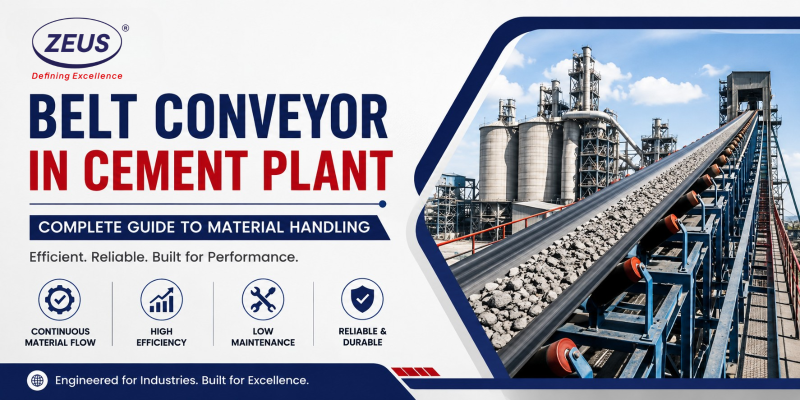
Cement manufacturing depends on the continuous movement of large quantities of bulk materials. From raw material handling to production and storage, every transfer point needs a reliable material handling solution.
Therefore, a belt conveyor manufacturer can provide application-specific conveyor systems for efficient and continuous material transportation in cement plants.
Moreover, a Belt Conveyor in Cement Plant helps move bulk materials continuously between different locations while reducing unnecessary manual handling. Because cement plants deal with heavy, abrasive and dusty materials, conveyor systems need to match the material properties, required capacity and actual plant conditions.
For this reason, choosing the right conveyor is not only about belt size. The complete system needs to work efficiently with the plant layout, material characteristics and production requirements.
In this guide, we explain the role of belt conveyors in cement plants, where they are used, what factors affect their design and how to choose a suitable system.
What Is a Belt Conveyor?
A belt conveyor continuously transports materials using a moving belt.
The conveyor receives material at the loading point and carries it to the required discharge location. Engineers can design the system for different conveying distances, capacities and operating conditions according to the application.
In cement plants, belt conveyors are particularly useful for handling bulk materials where continuous transportation is required.
A properly designed conveyor system can help create a smoother material flow between different plant sections and reduce repeated manual movement.
Where Is a Belt Conveyor Used in a Cement Plant?
Cement plants have several material handling stages. Therefore, belt conveyors can be used in different areas depending on the process and plant layout.
Raw Material Handling: Raw materials need to move from one processing or storage area to another. A belt conveyor can provide a continuous transportation route for suitable bulk materials.
Material Transfer: Different equipment and plant sections need to work together. Conveyors can connect these areas and maintain a consistent flow of material.
Storage Area: After processing or during intermediate stages, materials may need to be transported to storage locations. Conveyor systems can help transfer materials to the required storage area.
Clinker Handling: Clinker handling requires equipment capable of dealing with the relevant material characteristics and operating conditions. Conveyor selection should consider factors such as temperature, material properties and required capacity.
Cement Handling and Dispatch: Material movement continues after production. Depending on the plant configuration, conveyors can support movement towards storage or other downstream handling systems.
Why Are Belt Conveyors Important for Cement Plants?
A cement plant may handle a substantial quantity of material every day. Manual movement over long distances can become inefficient and difficult to manage.
As a result, a well-engineered conveyor system can support continuous material movement and reduce unnecessary manual handling.
As a result, a well-engineered conveyor system offers several operational advantages.
1. Continuous Material Flow
For example, a conveyor provides a continuous path for moving material between designated points.
This helps reduce interruptions caused by manual transportation and supports a more organized material handling process.
2. Efficient Bulk Material Handling
In addition, belt conveyors can handle bulk materials at different capacities depending on their design.
Zeus Engitech manufactures belt conveyors with belt widths ranging from 400 mm to 2000 mm and capacities of up to 2000 TPH, depending on the application and design requirements.
3. Reduced Manual Handling
Furthermore, automated transportation reduces the need for workers to repeatedly carry or move heavy materials across the plant.
As a result, employees can focus more on operational and maintenance activities.
4. Better Integration with Plant Equipment
Similarly, a conveyor can connect different material handling and processing sections.
This allows material to move through a planned route rather than relying on multiple manual handling points.
5. High Efficiency
When the conveyor is correctly selected and designed, it can support efficient material transportation throughout the required operating cycle.
6. Low Maintenance
Proper equipment selection, suitable components and application-based engineering can help keep maintenance requirements under control.
Key Factors When Selecting a Belt Conveyor for a Cement Plant
Every cement plant has its own requirements. Therefore, conveyor selection should start with the application rather than a standard specification.
Material Properties
The material you transport directly affects the conveyor design.
Important factors include:
- Material type
- Bulk density
- Particle size
- Moisture
- Temperature
- Abrasiveness
- Material flow characteristics
For cement plant applications, understanding these properties is especially important because bulk materials can create demanding operating conditions.
Required Capacity
The conveyor should match the required material handling rate.
Capacity affects several design parameters, including belt width and conveying speed.
A system designed for insufficient capacity can become a bottleneck, while unnecessarily oversized equipment may increase the overall project cost.
Belt Width
Belt width depends on factors such as:
- Required capacity
- Material characteristics
- Belt speed
- Loading conditions
- Conveyor configuration
Zeus Engitech’s belt conveyor range covers 400 mm to 2000 mm belt widths, allowing selection according to different industrial material handling requirements.
Conveying Distance
The distance between the feeding and discharge points is another important design parameter.
A longer conveyor route requires appropriate consideration of the drive system, supporting structure, belt selection and operating conditions.
Conveyor Inclination
If material needs to move upward, the inclination of the conveyor becomes an important consideration.
The material’s ability to remain stable on the belt should be evaluated when determining the appropriate conveyor configuration.
For applications requiring steep-angle conveying, specialized equipment such as a High Angle Cleated Belt Conveyor may be considered.
Site Conditions
However, existing cement plants may have limited space, existing structures and fixed equipment locations.
Therefore, a conveyor should be designed according to the actual site conditions rather than relying only on standard dimensions.
Belt Conveyor Design According to Application Requirements
A good conveyor design begins with understanding the complete material handling requirement.
The basic design considerations can be viewed as:
Material → Capacity → Belt Width → Belt Speed → Distance → Inclination → Plant Layout → Operating Conditions
These factors work together.
For example, changing the required capacity can affect belt width and speed. Similarly, changing the conveying distance can influence the drive and structural requirements.
Zeus Engitech states that its belt conveyors are designed considering IS 11592 and CEMA standards. The company also uses computer-based design and structure calculation programs based on applicable Indian and foreign standards.
This application-based approach helps develop conveyor systems according to the actual material and site requirements.
Main Components of a Cement Plant Belt Conveyor
A belt conveyor consists of multiple components that work together to transport material efficiently.
Conveyor Belt
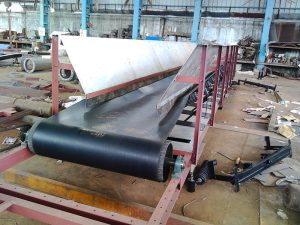
The belt carries the material from the loading point to the discharge point. The belt needs to be suitable for the material and operating environment.
Drive System
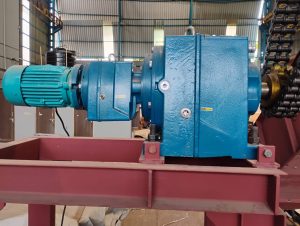
The drive system supplies the power required to move the belt and the material being transported.
Pulleys
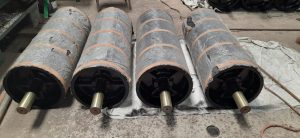
Pulleys guide the belt and support the required conveyor movement.
Idlers
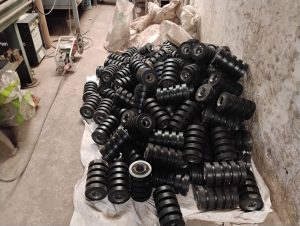
Idlers support the belt along the conveying route and help maintain proper belt movement.
Conveyor Structure
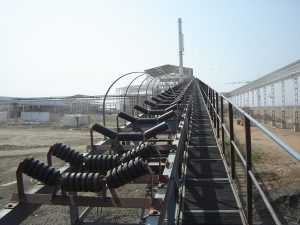
The structure supports the conveyor components and maintains the required alignment.
Loading Arrangement
The feeding arrangement controls how material enters the conveyor. Proper loading helps maintain stable material flow.
Discharge Arrangement
The discharge arrangement transfers the material to the next process, storage area or handling equipment.
Belt Conveyor Applications Beyond Cement Plants
Although cement industries are an important application area, belt conveyors are also used across various bulk material handling industries.
These include:
- Coal and power plants
- Minerals and mining
- Brick, clay and ceramic industries
- Port and marine industries
- Food industries
- Paper industries
- Biomass industries
- Solid waste handling
- Tyre and rubber industries
- General industrial applications
This wide application range makes belt conveyors a versatile solution for continuous bulk material transportation.
Belt Conveyor vs Manual Material Handling
Manual material transportation becomes increasingly difficult as material volume and conveying distance increase.
| Factor | Manual Handling | Belt Conveyor |
|---|---|---|
| Material Movement | Worker-dependent | Continuous |
| Bulk Handling | Limited | Suitable for large quantities |
| Long Distance | Time-consuming | Efficient |
| Labour Requirement | Higher | Reduced |
| Material Flow | Intermittent | More consistent |
| Automation | Limited | Can integrate with plant systems |
| Productivity | Dependent on manpower | Supports continuous operation |
For a cement plant handling large quantities of bulk material, a properly designed conveyor can provide a more organized and efficient transportation method.
What Should Cement Manufacturers Consider Before Buying a Conveyor?
Before approaching a belt conveyor manufacturer, it is useful to prepare the basic application details.
Consider providing:
1. Material:
What material will the conveyor handle?
2. Capacity:
How many tonnes per hour need to be transported?
3. Distance:
What is the required conveying length?
4. Elevation:
Does the material need to move horizontally or upward?
5. Material Properties:
What are the bulk density, particle size, temperature and abrasiveness?
6. Plant Layout:
Where will the feeding and discharge points be located?
7. Operating Conditions:
What are the expected working hours and environmental conditions?
These details help the manufacturer understand the application and develop an appropriate conveyor solution.
Why Application-Based Conveyor Design Matters
A cement plant conveyor should not be selected only by comparing price or belt width.
Two plants may transport similar materials but have completely different:
- Capacities
- Conveying distances
- Layouts
- Elevations
- Transfer points
- Operating environments
- Expansion requirements
Therefore, an application-based approach can help achieve a better balance between performance, reliability and maintenance.
For businesses researching cement plant machinery manufacturers in India, engineering capability and the ability to provide customized material handling equipment can be important factors during supplier evaluation.
Features to Look for in a Cement Plant Belt Conveyor
When evaluating a conveyor system, consider features that support reliable industrial operation.
A suitable system may include:
- Design according to applicable standards
- Interchangeable components
- Application-based equipment selection
- Site-specific design
- Material-property-based engineering
- Dust-conscious operation
- High material handling efficiency
- Low maintenance requirements
- Suitable capacity for the application
Choose the exact configuration according to the material, plant layout and operating requirements.
Get a Belt Conveyor Designed for Your Cement Plant
A belt conveyor can become an important part of the material handling infrastructure in a cement plant. However, the best results come from selecting equipment according to the actual application.
Whether the requirement involves raw material handling, material transfer, storage, clinker movement or another bulk material application, the conveyor should match the required capacity, conveying route and site conditions.
Looking for a belt conveyor for your cement plant?
Share your material type, required capacity, conveying length, belt width, inclination and plant layout with Zeus Engitech.
As an experienced industrial conveyor manufacturer and supplier, Zeus Engitech can discuss your requirement and develop a solution based on the application.
Have a Cement Plant Conveyor Requirement?
Contact Zeus Engitech today to discuss your project and get a belt conveyor solution designed around your material handling requirements.
Frequently Asked Questions
1. What is the main use of a belt conveyor in a cement plant?
A belt conveyor is mainly used for continuous transportation of suitable bulk materials between different sections of a cement plant, including raw material handling, transfer and storage applications.
2. What capacity can a cement plant belt conveyor handle?
The application and conveyor design determine the required capacity. Zeus Engitech offers belt conveyors with capacities of up to 2000 TPH, with belt widths from 400 mm to 2000 mm.
3. What standards are used for belt conveyor design?
Belt conveyors can be designed according to applicable industry standards. Zeus Engitech designs its belt conveyors considering IS 11592 and CEMA standards, along with relevant Indian and foreign standards.
4. Can a belt conveyor be customized for an existing cement plant?
Yes. Conveyor design can consider the existing plant layout, available space, material properties, capacity, conveying distance and site conditions.
5. What materials can be transported using belt conveyors?
Belt conveyors can be used for various bulk materials. Their suitability depends on the material’s properties, required capacity and operating conditions.
6. How do I choose the right belt conveyor manufacturer?
Evaluate the manufacturer’s engineering capability, industrial experience, customization approach, applicable standards, equipment specifications and ability to understand your specific material handling requirements.
7. Are belt conveyors suitable for high-capacity material handling?
Yes. Belt conveyors can be designed for high-capacity bulk material transportation. The appropriate belt width, speed, drive arrangement and other components depend on the required application.
8. What information is needed to design a cement plant belt conveyor?
The manufacturer generally needs information such as material type, bulk density, capacity, particle size, conveying distance, elevation, inclination, loading and discharge points, plant layout and operating conditions.